 PetCalculator.net
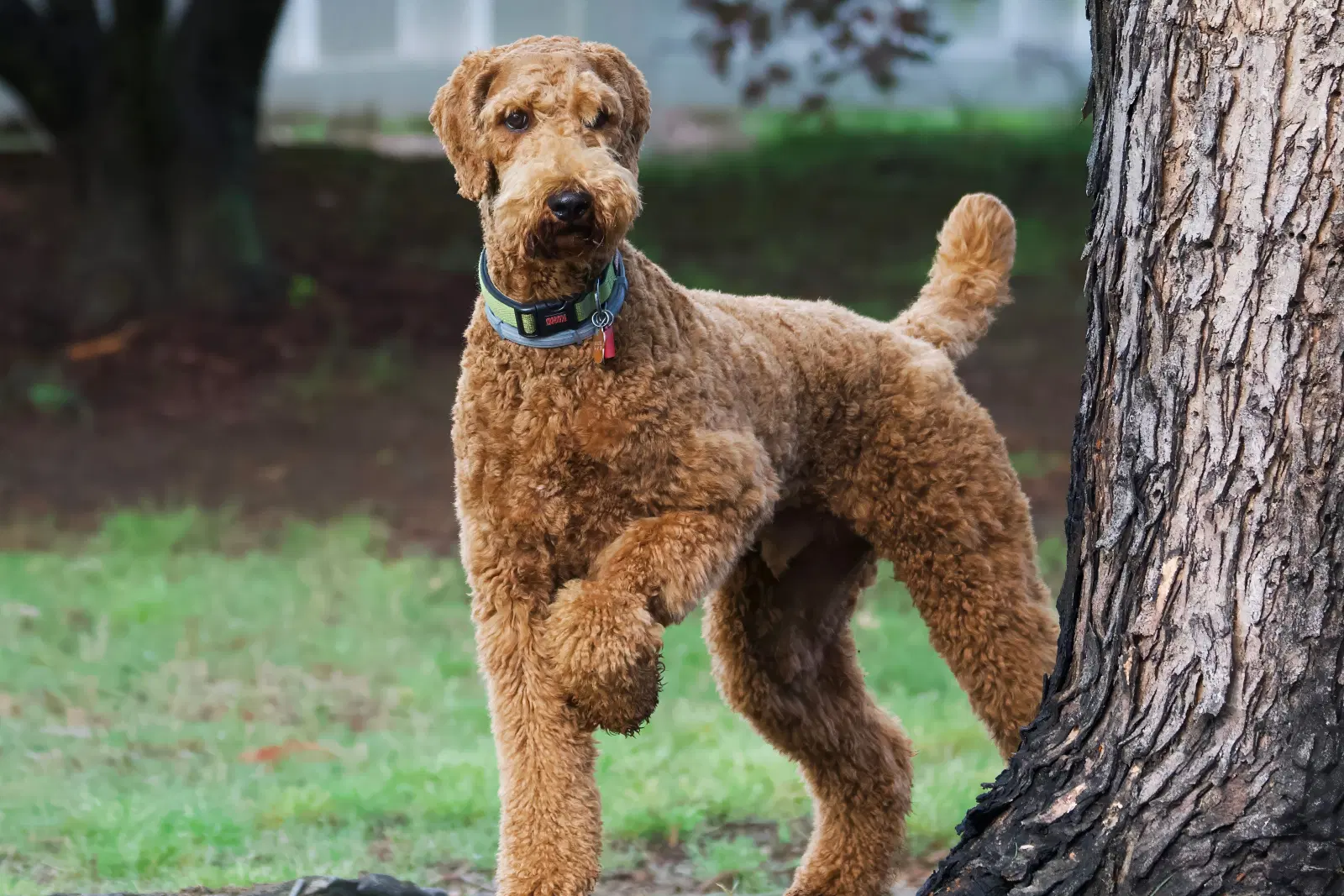
How Much to Feed a Poodle (Standard)
Get a precise daily feeding amount for your Poodle (Standard) based on veterinary RER/MER formulas, adjusted for their weight, life stage, and activity level. Free, no sign-up.
Free • No sign-up • Vet formula-based
Poodle (Standard) at a glance
- Breed Group Non-Sporting
- Adult Weight 45–70 lb
- Male 60–70 lb
- Female 45–60 lb
Life stage timeline
Feeding considerations
Standard Poodles run leaner and more athletic than many dogs their size, so calorie needs can be higher than owners expect if the dog is genuinely active, while a sedentary Standard Poodle needs meaningfully less. This is general guidance, not a substitute for advice from your veterinarian. Not medical advice, consult your vet.
Energy & temperament
Highly intelligent, athletic, and originally bred as a working retrieving gun dog despite the breed's modern reputation as a show and companion dog. Standard Poodles need real physical and mental activity to stay at a healthy weight and temperament.
Health & feeding notes
Growth and Large-Breed Puppy Nutrition
Standard Poodles are classified as a large breed based on adult height and weight, even though their frame is lighter than heavier large breeds. A controlled, steady growth rate matters more than fast growth, and large-breed puppy formulas with restricted calcium and phosphorus help prevent excess mineral uptake during the rapid bone growth of the first several months. Growth plates in the long bones typically close between 12 and 18 months, so keeping a puppy on a large-breed formula through at least the first year, longer for bigger males, supports steady joint development rather than a growth spurt that puts extra stress on immature joints.
Bloat (GDV) Risk and Feeding Management
The Standard Poodle's deep chest puts it among the breeds Purdue University researchers directly studied in a landmark prospective study of gastric dilatation volvulus, commonly called bloat. That research, along with a related dietary follow-up study from the same group, found that several long-held bloat prevention habits actually raised risk rather than lowering it. Feeding from an elevated bowl was linked to a substantially higher risk of bloat, as was eating quickly and eating one large meal a day instead of two smaller ones. Dry food with fat or oil among the first four ingredients was also linked to increased risk, and moistening dry food that contains citric acid as a preservative was linked to a sharply higher risk in the same research. Feeding two scheduled meals a day from a floor level bowl, avoiding fast eating, and reading ingredient labels are practical takeaways from this Standard Poodle specific research rather than generic large breed advice.
Body Condition Scoring Through a Dense Coat
A Standard Poodle's dense, curly coat can hide early weight gain or loss that would be obvious on a shorter coated dog. Visual inspection alone is not reliable. Regular hands on rib and waist checks, feeling for ribs under a light layer of fat and confirming a visible tuck at the waist when the coat is compressed, give a much more accurate picture of body condition than looking at the dog's silhouette, especially between grooming appointments when coat volume changes.
Joint Health and Hip Dysplasia
Standard Poodles carry a meaningful rate of hip dysplasia, with Orthopedic Foundation for Animals data putting the breed's dysplastic rate at roughly 12 percent of dogs evaluated, a figure that is likely skewed toward better than average hips since it reflects dogs whose owners chose to screen them, often for breeding. Studies using the more sensitive PennHIP distraction method, which measures joint laxity directly rather than relying on a subjective extended view X-ray, tend to find looser hips in the breed than OFA scoring alone suggests. The general principle established in large breed feeding research, that keeping a growing puppy lean rather than rapidly gaining weight reduces the lifetime risk and severity of hip dysplasia, applies to Standard Poodles as a large, growing breed even though the foundational study on this was conducted in Labrador Retrievers rather than Poodles specifically.
Addison's Disease (Hypoadrenocorticism)
Standard Poodles are one of the breeds most strongly associated with Addison's disease, an autoimmune condition where the adrenal glands stop producing enough cortisol and aldosterone. Reported prevalence varies by study population, from roughly 1 to 2 percent in general clinical populations up to 8 to 9 percent in a landmark heritability study that enrolled dogs from lines already known to carry the condition, but every study agrees the breed is dramatically over represented compared to dogs generally. Unlike most breeds, where Addison's disease mostly affects females, Standard Poodles are affected in roughly equal numbers of males and females. Diet does not cause or cure Addison's disease, which requires lifelong hormone replacement once diagnosed, but a diagnosed dog benefits from a predictable feeding schedule, since stress can trigger a crisis in a dog that cannot produce its own cortisol response, and from consistent sodium and potassium intake once stabilized on medication.
Sebaceous Adenitis
Sebaceous adenitis is an inherited skin condition in which the glands that produce natural skin oil are gradually destroyed, leading to scaling, hair loss in patches, and a musty coat odor, usually appearing between 2 and 7 years of age. It is well documented in Standard Poodles, with breed health surveys putting prevalence in the low single digits, and both sebaceous adenitis and Addison's disease trace back to the same period of heavy inbreeding on popular sires in the mid 20th century. There is no cure, but veterinary dermatology literature supports high dose omega 3 and omega 6 fatty acid supplementation alongside topical treatment as part of managing the skin barrier damage the condition causes.
Activity Level and Working Heritage
Standard Poodles were bred as retrieving gun dogs long before they became a show and companion breed, and that heritage shows in their build. Unlike brachycephalic breeds with airway limits or giant breeds constrained by body mass, a healthy Standard Poodle has no real anatomical ceiling on activity level, and veterinary and working dog literature supports placing genuinely active Standard Poodles in a high activity tier for calorie purposes. In practice this means the gap between a sedentary companion Poodle and one doing real field work, agility, or another demanding sport can be large, and activity level matters more for this breed than for many dogs of similar size.
Poodle Feeding FAQ
How much should I feed a Standard Poodle puppy?
Standard Poodle puppies need 3 to 4 meals a day up to about 4 months old, then 3 meals a day until 6 months, when most owners shift to 2 meals a day for the rest of the dog's life. Enter your puppy's current weight and age into the calculator above for an exact daily amount.
How much should an adult Standard Poodle eat per day?
Most adult Standard Poodles need roughly 2.5 to 3.5 cups of a quality dry food per day split into two meals, but the right amount depends heavily on weight and activity level given how athletic this breed can be. Use the calculator above for a precise number.
Should I use an elevated food bowl to prevent bloat in my Standard Poodle?
No. A Purdue University study that directly included Standard Poodles found that feeding from a raised bowl was linked to a meaningfully higher risk of bloat, not a lower one, likely because it changes how quickly and how much air a dog swallows while eating. Standard Poodles should be fed from bowls placed on the floor.
How can I tell if my Standard Poodle is overweight if their coat is thick?
Looking at your dog is not enough since a full coat hides both fat and a trim waist. Run your hands firmly along the rib cage. You should feel the ribs easily under a thin layer of fat, similar to the feel of the back of your hand. If you have to press hard to find the ribs, your Poodle is likely carrying extra weight.
At what age is a Standard Poodle considered a senior?
Most veterinary guidance places large breed dogs into the senior category around 7 years old, and that is a reasonable starting point for Standard Poodles, though this breed tends to be longer lived than many large breeds and individual dogs vary. Talk to your vet about the right time to shift to senior feeding for your specific dog.
Can diet prevent or cure Addison's disease in Standard Poodles?
No. Addison's disease is an autoimmune condition that destroys part of the adrenal glands, and Standard Poodles are one of the breeds most affected by it. Diet cannot prevent or reverse the underlying disease, which requires lifelong hormone replacement once diagnosed, but a predictable feeding schedule and consistent electrolyte intake support a diagnosed dog's stability.
Does my Standard Poodle need more food if they do agility, hunting, or another demanding activity?
Yes. Standard Poodles were originally bred as working retrievers and remain a genuinely athletic breed, so a dog doing real field work, agility, or another demanding sport can need noticeably more calories than a companion Poodle of the same size. The calculator's activity level step accounts for this directly.
Is free feeding okay for a Standard Poodle?
It is not recommended. Free feeding makes it harder to notice early appetite loss, which is often the first sign of a bloat episode or an Addisonian crisis, both of which need prompt attention in this breed. Two scheduled meals a day let you catch a missed meal quickly and also fit the feeding pattern linked to lower bloat risk.