 PetCalculator.net
How Much to Feed a Bulldog
Get a precise daily feeding amount for your Bulldog based on veterinary RER/MER formulas, adjusted for their weight, life stage, and activity level. Free, no sign-up.
Calculate My Bulldog's Portion
Free • No sign-up • Vet formula-based
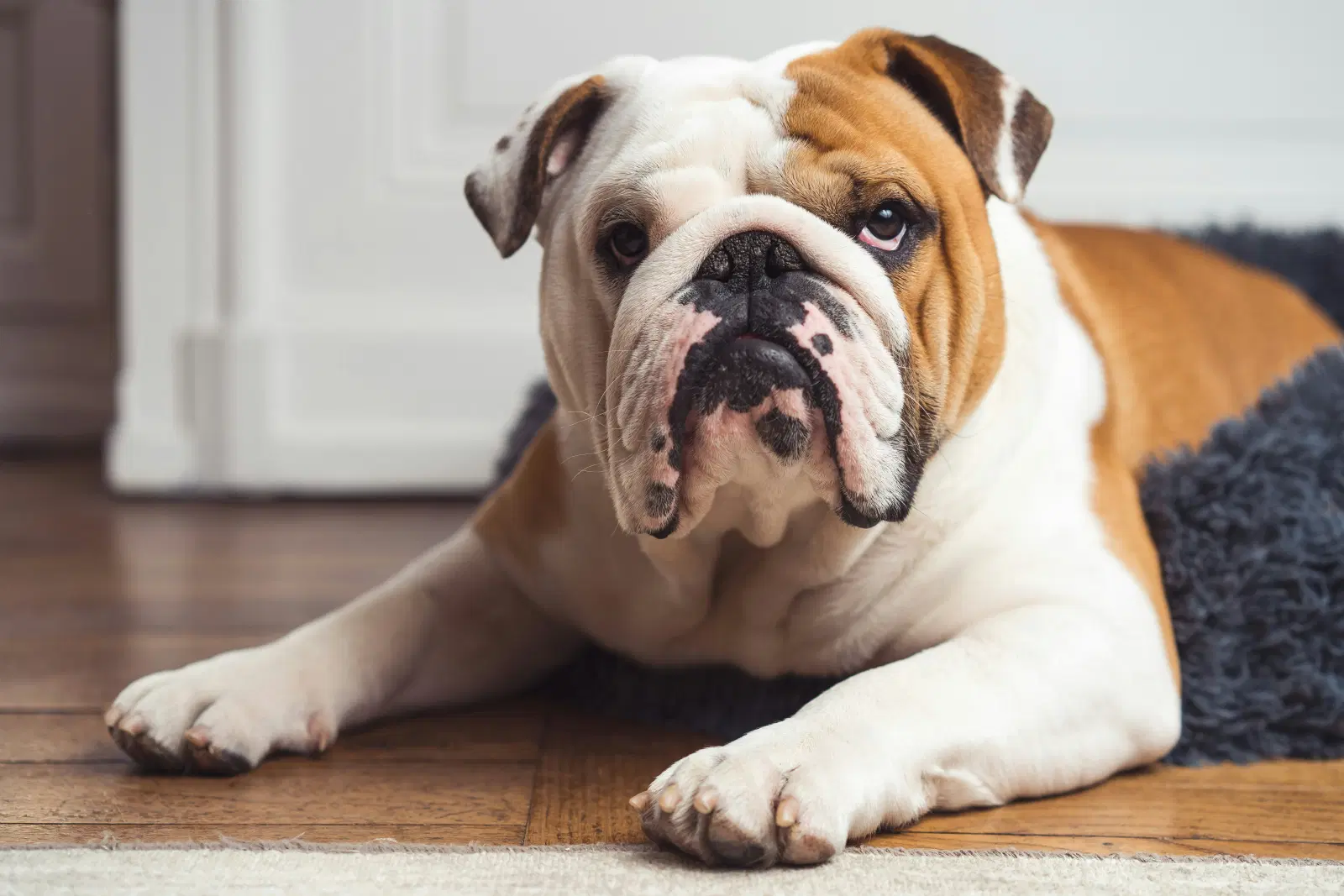
Bulldog at a glance
- Breed Group Non-Sporting
- Adult Weight 40–55 lb
- Male 45–55 lb
- Female 40–50 lb
Life stage timeline
Feeding considerations
With minimal exercise tolerance and a body structure that already strains their airway and joints, Bulldogs have very little margin for excess calories before weight becomes a serious health problem rather than a cosmetic one. This is general guidance, not a substitute for advice from your veterinarian. Not medical advice, consult your vet.
Energy & temperament
Calm, affectionate, and among the lowest energy breeds recognized by the AKC. Bulldogs share the French Bulldog's brachycephalic airway limitations, which combined with very low natural activity levels makes this one of the breeds most prone to obesity.
Health & feeding notes
Checking body condition on a barrel chested breed
The standard 9 point body condition scale, which looks for a visible waist and a tucked abdomen, does not translate well to a Bulldog's naturally broad, low slung frame. The safer method is a hands on rib check: run flat fingers along the ribcage, and you should feel individual ribs under a thin layer of fat, similar to running a hand over the back of your knuckles. If you have to press firmly to find the ribs, the dog is carrying extra weight regardless of how stocky it looks. Because Bulldogs already carry a heavy joint and airway disease load, a lean body condition, closer to a 4 out of 9 on the standard scale, is a safer target than a middle of the range score that might be fine for a healthier breed.
Real world weight versus the show standard
The weight range above reflects the show standard, but large scale UK veterinary data on Bulldogs under regular care found average adult weights well above that range, often landing in the high 50s to low 60s in pounds for males. Weighing above the show standard does not automatically mean a dog is overweight, and body condition remains the better test than a single number on a scale. It is worth knowing this gap exists so a heavier than expected reading on the vet's scale does not get treated as an emergency on its own.
Weight and breathing feed off each other
In a brachycephalic breed, extra weight and breathing trouble reinforce each other. Fat around the neck and chest narrows an already tight airway, which increases the effort of breathing and raises body temperature, and the resulting heat stress and low exercise tolerance make it even harder to burn off calories. Because Bulldogs cannot rely on higher activity multipliers the way many breeds can, keeping this dog lean, calculating calorie needs from ideal weight rather than current weight, and factoring treats into the daily total, is one of the more effective non surgical ways to ease breathing difficulty.
Skin fold irritation is usually structural, not a food allergy
Bulldogs are diagnosed with skin fold dermatitis far more often than most breeds, and it is tempting to blame diet, especially grain. In most cases the real cause is mechanical: the deep facial and tail folds trap moisture and debris, which lets yeast and bacteria overgrow in that warm environment. True food allergies do exist in the breed, but they are less common than fold dermatitis, and when they occur the trigger is almost always an animal protein like chicken or beef rather than grain. A properly run elimination diet trial, not a random switch to a grain free bag, is the only reliable way to confirm a food allergy, while fold dermatitis responds better to regular cleaning than to a diet change.
Why puppy feeding should follow large breed rules
A Bulldog's adult weight puts it in the medium size category, but its dense bone structure and unusually high rate of joint disease mean it benefits from the calcium and growth rate limits normally reserved for large breed puppies. A small clinical study of the breed found hip dysplasia, elbow dysplasia, patellar luxation, and spinal vertebral abnormalities were all common, though the sample was small enough that the exact figures are better read as a signal of high risk than a precise population rate. Sticking to a large breed style growth food with controlled calcium and moderate calorie density, rather than a typical small or medium breed puppy formula, gives the joints a better chance.
Why slow feeders work better than raised bowls
The Bulldog's short muzzle and undershot jaw make it easy to gulp food and swallow air along with it, which shows up as gas, mild bloating, or regurgitation after meals. Raised feeders are sometimes marketed as a fix for exactly this, but the deep chested, broad bodied build shared by Bulldogs is also the build most linked to gastric dilatation volvulus, a life threatening twisting of the stomach, and elevated bowls have been associated with a higher rate of that condition in similarly built breeds. A floor level bowl paired with a slow feeder insert or puzzle style bowl addresses the gulping without that added risk.
Bladder stones in intact males, and an earlier senior stage
Bulldogs carry a genetic predisposition to more than one type of bladder stone, and the most breed specific of these is an androgen driven form of cystinuria that shows up almost exclusively in intact males, sometimes appearing before 2 years of age. Neutering often resolves it, and when it does not, management leans on a low purine, high moisture diet under veterinary guidance rather than anything an owner should attempt alone. Separately, because Bulldogs carry a heavier disease load and a shorter median lifespan than most medium breeds, many vets consider them senior starting around 6 years old rather than the 7 to 8 year mark used for medium breeds generally, which is worth knowing so joint and weight monitoring can start a little earlier than expected.
Bulldog Feeding FAQ
How much should I feed a Bulldog puppy?
Bulldog puppies do best on a large breed style growth formula with controlled calcium, even though they will not grow into a large adult, because of how often this breed develops joint disease. Feed 3 to 4 small meals through about 6 months, then 2 to 3 through 9 months. Enter your puppy's current weight and age into the calculator above for an exact daily amount.
How much should an adult Bulldog eat per day?
Most adult Bulldogs need roughly 1.5 to 2 cups of a quality dry food per day split into two meals, calculated against their ideal weight rather than current weight if they are carrying extra pounds. Because this breed cannot safely burn off excess calories through hard exercise, use the calculator above rather than a bag's generic guideline.
Why does my Bulldog need large breed puppy food if the adult will only weigh around 50 pounds?
Adult size is not the deciding factor here. Bulldogs carry an unusually high rate of hip dysplasia, elbow dysplasia, and spinal abnormalities regardless of their medium adult weight, and a slower, calcium controlled growth rate similar to what large breeds need gives developing joints a better chance.
How can I tell if my Bulldog is overweight when the breed already looks stocky?
Visual checks are unreliable on this build. Run flat fingers along the ribcage, you should feel individual ribs under a thin layer of fat with light pressure. If you need to press firmly to find them, or there is no waist at all from above, your Bulldog is likely carrying extra weight no matter how muscular it looks.
Is my Bulldog's itchy, irritated skin caused by their food?
Usually not. Most skin fold irritation in Bulldogs comes from trapped moisture and debris in the facial and tail folds, not diet, and responds better to regular cleaning than a food switch. True food allergies happen too, but they are less common than fold dermatitis and almost always trace back to a protein source like chicken or beef rather than grain.
Should I use an elevated bowl to make eating easier for my Bulldog?
No, floor level is safer. Bulldogs already gulp food and swallow air due to their short muzzle, and raising the bowl has been linked to a higher rate of gastric dilatation volvulus, a dangerous stomach twisting condition, in deep chested breeds. A slow feeder or puzzle bowl at floor level addresses the gulping without that added risk.
At what age is a Bulldog considered a senior?
Many vets place the senior stage around 6 years old for Bulldogs, earlier than the 7 to 8 year mark used for medium breeds generally, reflecting the breed's heavier joint and airway disease load and shorter typical lifespan. Starting joint and weight monitoring a little earlier than you would with a healthier breed is a reasonable precaution.
Why are intact male Bulldogs prone to bladder stones?
Bulldogs carry a genetic predisposition to an androgen driven type of cystinuria that occurs almost exclusively in intact males, sometimes appearing before 2 years of age. Neutering often resolves it. If stones still form, management typically involves a low purine, high moisture diet directed by a veterinarian rather than anything to manage at home alone.