 PetCalculator.net
How Much to Feed a German Shepherd
Get a precise daily feeding amount for your German Shepherd based on veterinary RER/MER formulas, adjusted for their weight, life stage, and activity level. Free, no sign-up.
Calculate My Shepherd's Portion
Free • No sign-up • Vet formula-based
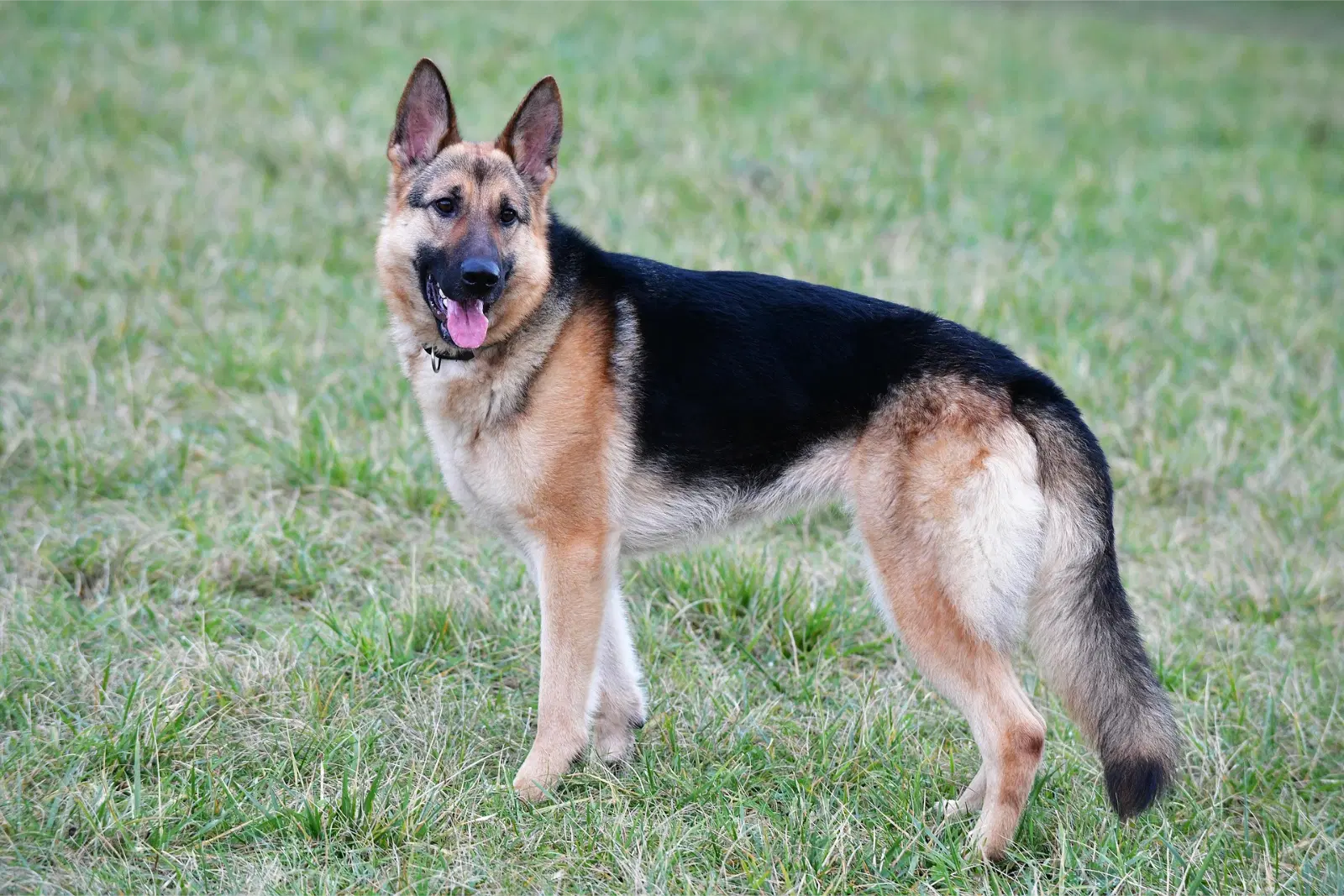
German Shepherd at a glance
- Breed Group Herding
- Adult Weight 50–90 lb
- Male 65–90 lb
- Female 50–70 lb
Life stage timeline
Feeding considerations
Rapid growth in large breed puppies is linked to a higher risk of hip and elbow problems later in life, so a large breed specific puppy formula and controlled feeding matter more here than simply feeding to appetite. This is general guidance, not a substitute for advice from your veterinarian. Not medical advice, consult your vet.
Energy & temperament
Confident, hard working, and bred for sustained physical and mental effort. German Shepherds are a large breed that continues developing bone and joint structure well past their first birthday, which makes growth rate control during puppyhood as important as portion size.
Health & feeding notes
Deep chest and bloat risk
German Shepherds have the deep, narrow chest conformation that puts large and giant breeds at meaningfully higher risk for gastric dilatation volvulus, commonly called bloat, a true emergency where the stomach fills with gas and twists. Feeding two to three smaller meals rather than one large meal reduces how much the stomach distends at once. Avoiding hard exercise for roughly an hour before and two hours after eating gives the stomach time to settle. Contrary to older advice, current veterinary consensus actually favors floor level bowls over elevated feeders for healthy dogs of this breed, since a raised feeding position appears to encourage the kind of air swallowing that can contribute to bloat. Elevated bowls are generally reserved for dogs with a specific medical reason to need one, not used as a preventive measure.
Hip and elbow dysplasia
This is one of the most consequential health issues in the breed. Published prevalence figures vary quite a bit depending on the study population and whether dogs were screened or diagnosed after showing symptoms, but registry data consistently puts a meaningful share of the breed, roughly one in five in some large datasets, somewhere on the dysplasia spectrum for hips, elbows, or both. Controlled growth during puppyhood matters more here than in most breeds: a large breed puppy formula with a restricted calcium level and a proper calcium to phosphorus ratio helps prevent the kind of rapid bone growth that raises joint risk. That same growth plate vulnerability continues well past 12 months, since German Shepherds are not fully skeletally mature until somewhere between 18 and 24 months, with muscling continuing to fill out for a while after that. Keeping a lean body condition throughout life, not just during growth, is one of the most effective ways to reduce mechanical stress on joints that may already be predisposed to problems.
Exocrine pancreatic insufficiency
German Shepherds are disproportionately represented among dogs diagnosed with exocrine pancreatic insufficiency, a condition where the pancreas stops producing enough digestive enzymes and the dog can no longer properly digest food. It typically shows up as steady weight loss and a ravenous appetite despite eating normally, along with large, greasy, foul smelling stools, most often in young to middle aged adults. It is diagnosed with a blood test, not guessed at from symptoms alone, so any dog showing this pattern needs veterinary bloodwork rather than a diet change at home. Current veterinary guidance has actually moved away from the older low fat approach to managing this condition, since overly restricting fat can worsen deficiencies in fat soluble vitamins. Dogs diagnosed with this condition are typically managed with enzyme supplements mixed into every meal and often need vitamin B12 supplementation as well, under a veterinarian's guidance.
Working versus companion energy needs
Few breeds show as wide a gap between companion and working energy requirements as the German Shepherd. A dog in a sedentary or moderately active pet role needs meaningfully less than one doing sustained herding, protection, or police and military work, where daily energy needs can run dramatically higher. This breed's working heritage genuinely supports a higher activity tier in the calculator above for dogs that are doing real physical work, not just ones with a lot of personality. The important exception is any dog with a diagnosed spinal or joint condition. For those dogs, activity should be scaled back regardless of the breed's typical energy reputation, since added calories and unrestricted exercise can accelerate joint or spinal deterioration rather than simply reflecting genuine energy output.
Degenerative myelopathy and lumbosacral conditions
German Shepherds carry a known genetic predisposition to degenerative myelopathy, a progressive spinal cord disease that leads to gradual hind limb weakness, usually in middle aged to older dogs, and to degenerative lumbosacral stenosis, a narrowing of the lower spinal canal that can compress nerve roots and cause pain and mobility loss. Neither condition is caused by diet and neither has a dietary cure. What diet does affect is how well a dog copes with either one, since extra body weight adds mechanical load to already compromised nerves and joints, and a lean body condition is one of the few things an owner can meaningfully control after a diagnosis like this. High quality protein also matters more for dogs managing these conditions, since maintaining muscle mass helps preserve mobility and stamina for longer.
Skin and food sensitivities
German Shepherds show up frequently in veterinary discussions of skin allergies and food related skin reactions, though the evidence connecting this specifically to food, as opposed to environmental allergens, is less clear cut than some of this breed's other health issues. Signs to watch for include year round itching that does not follow a seasonal pattern, recurrent ear infections, and occasionally mild digestive upset alongside the skin symptoms. Blood or skin allergy tests are not considered reliable for actually confirming a food allergy. The accepted way to diagnose one is a strict elimination diet trial using a novel or hydrolyzed protein source for several weeks, followed by reintroducing the original food to see if symptoms return, ideally done with veterinary guidance rather than through repeated food switching at home.
Why this breed's senior life stage starts later than it might seem
Generic large breed guidance often puts senior status somewhere around six to eight years, but breed specific data on German Shepherd lifespans allows for a more precise estimate. Applying a standard veterinary formula for senior onset, which defines it as the final quarter of a breed's expected lifespan, to published median longevity data for the breed lands the senior transition at right around eight years of age. That said, given how much orthopedic and neurological disease this breed carries, many owners and veterinarians choose to start senior focused wellness monitoring, joint support, and closer attention to body condition somewhat earlier than the formal senior threshold, rather than waiting until age eight to begin paying closer attention.
Shepherd Feeding FAQ
How much should I feed a German Shepherd puppy?
German Shepherd puppies should eat a large breed specific puppy formula in 3 to 4 meals a day through about 6 months, since overly fast growth is linked to joint problems later in life. Enter your puppy's current weight and age into the calculator above for an exact daily amount.
How much should an adult German Shepherd eat per day?
Most adult German Shepherds need roughly 3 to 4 cups of a quality dry food per day, split into two meals, but the right amount depends on your dog's weight, working load, and the food's calorie density. Use the calculator above with your dog's details for a precise number.
At what age does a German Shepherd become a senior dog?
Around 8 years of age, based on applying a standard veterinary senior life stage formula to breed specific longevity data for German Shepherds. This is later than the six to eight year range often used for large breeds generally, though many owners start senior focused joint and weight monitoring somewhat earlier given how common orthopedic and spinal conditions are in this breed.
Why is bloat such a concern for German Shepherds, and does how I feed them matter?
Their deep chested build puts them at real risk for gastric dilatation volvulus, a life threatening twisting of the stomach. Feeding two to three smaller meals instead of one large one, avoiding hard exercise right around mealtimes, and using a floor level rather than elevated bowl are all steps that reduce risk.
What is exocrine pancreatic insufficiency, and why does it matter for this breed?
It is a condition where the pancreas cannot produce enough digestive enzymes, and German Shepherds are diagnosed with it disproportionately compared to other breeds. Watch for steady weight loss and a large appetite despite normal eating, along with greasy, foul smelling stools. It requires a veterinary blood test to diagnose and is not something to manage with diet changes alone.
Should I use an elevated bowl for my German Shepherd?
Not unless your veterinarian recommends one for a specific reason. Current research actually links elevated feeders to a higher bloat risk in large, deep chested breeds, so floor level feeding is generally the better default for a healthy dog.
How much more does a working German Shepherd need to eat than a companion dog?
Substantially more. Dogs doing sustained herding, protection, or police and military work can need dramatically more daily energy than a companion dog of the same weight. The calculator's activity level setting is meant to capture that difference, though dogs with a diagnosed spinal or joint condition should have their activity level and calories scaled down regardless of how active the breed typically is.
Does a German Shepherd with hip or joint problems need a different diet?
Not usually a fundamentally different diet, but weight management becomes more important. Keeping the dog lean reduces mechanical stress on already affected joints or spine, and higher quality protein helps preserve muscle mass that supports mobility. Talk to your vet about joint support supplements and whether your dog's current food and portions still make sense.