 PetCalculator.net
How Much to Feed a Great Dane
Get a precise daily feeding amount for your Great Dane based on veterinary RER/MER formulas, adjusted for their weight, life stage, and activity level. Free, no sign-up.
Free • No sign-up • Vet formula-based
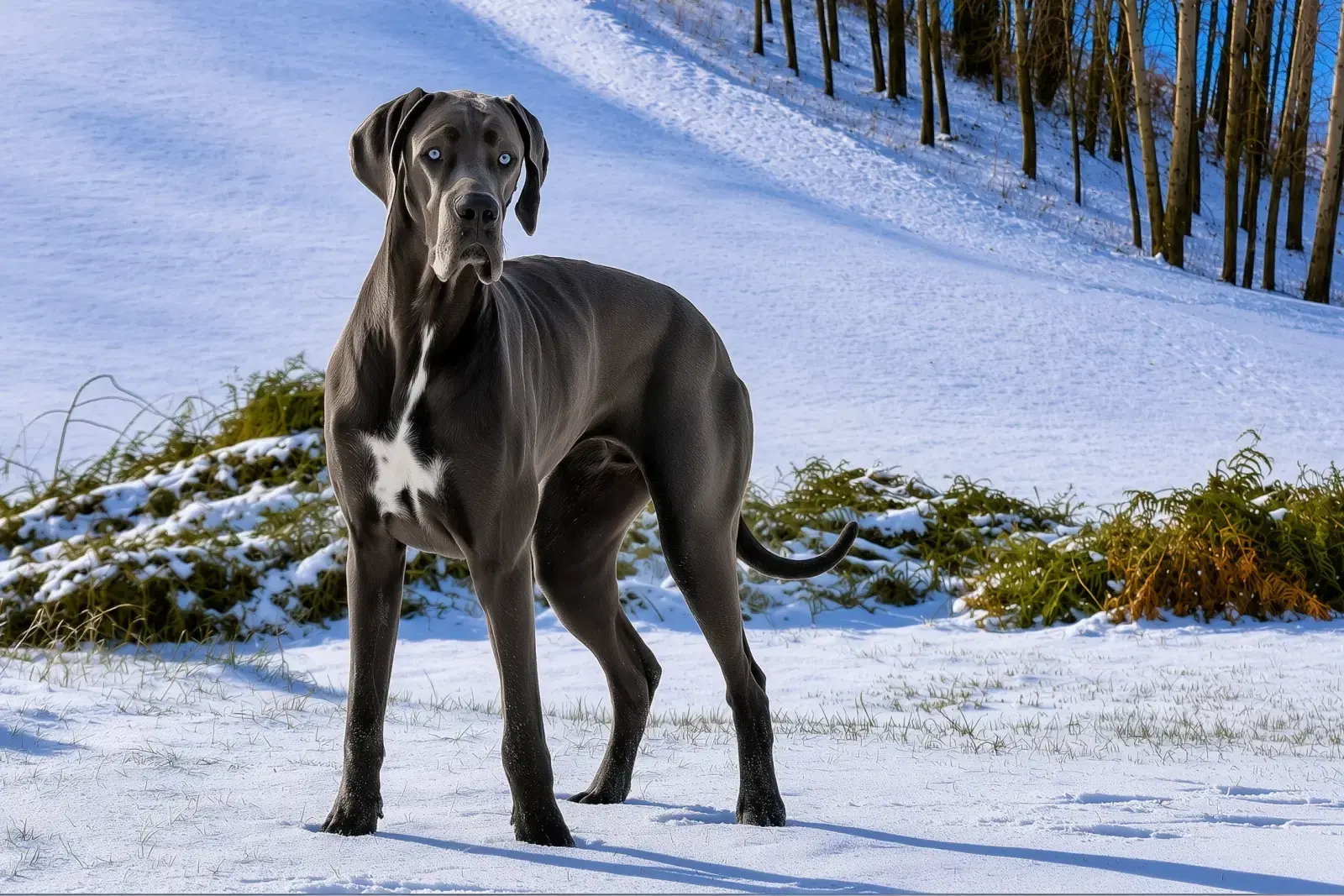
Great Dane at a glance
- Breed Group Working
- Adult Weight 110–175 lb
- Male 140–175 lb
- Female 110–140 lb
Life stage timeline
Feeding considerations
Great Danes need a large or giant breed specific puppy formula fed on a controlled schedule, since rapid growth in giant breeds is strongly linked to skeletal problems, and as adults they carry a notably elevated risk of bloat, so smaller, more frequent meals and calm behavior around feeding time matter more here than in almost any other breed. This is general guidance, not a substitute for advice from your veterinarian. Not medical advice, consult your vet.
Energy & temperament
Gentle, affectionate, and surprisingly low energy for such an enormous dog, often called a gentle giant for good reason. As a giant breed, Great Danes have one of the longest and most delicate growth periods of any dog, making growth rate control critical during puppyhood.
Health & feeding notes
Bloat is the single biggest risk to manage
Great Danes carry the highest lifetime risk of gastric dilatation volvulus of any breed, with widely cited veterinary research out of Purdue University putting the lifetime odds as high as 37 to 42 percent. The deep, narrow chest that defines the breed leaves room for the stomach to twist after it fills with gas, and once that happens it is a surgical emergency. Splitting daily food into two or three smaller meals, using a floor level bowl rather than a raised one, and resting the dog for roughly an hour before and after eating are the main things an owner can control. That same research found that elevated feeders and fast eating both increased risk rather than lowered it, which runs against older advice many owners still hear. Many Great Dane owners choose a prophylactic gastropexy, a procedure that tacks the stomach in place, often done at the same time as a spay or neuter, since it does not stop bloating but essentially eliminates the fatal twisting.
Growth needs to be slow and controlled, not maximized
A Great Dane puppy can grow from under two pounds to well over a hundred in a single year, and that speed is exactly what makes giant breed nutrition different from feeding any other size dog. Puppy food built for this breed keeps calcium in a narrow band, generally 1.2 to 1.8 percent on a dry matter basis, because young giant breed puppies absorb calcium in direct proportion to how much is in the diet rather than regulating it the way smaller breeds do. Too much calcium during this window is linked to hypertrophic osteodystrophy, osteochondrosis, and uneven limb growth, while pushing calories to bulk a puppy up faster adds joint stress before the skeleton is ready for it. A large or giant breed specific puppy formula, not an all life stages food, is the safer choice through this period. Hip and elbow dysplasia are already common in the breed, and controlled, lean growth is one of the few things an owner can actually influence in a condition that is otherwise mostly genetic.
The same growth-rate risk shows up in the neck
Wobbler syndrome, the informal name for cervical spondylomyelopathy, is a spinal cord compression problem seen fairly often in young adult Great Danes, usually showing up as wobbly rear-end coordination or a swaying gait before age two. The underlying cause is structural, a malformation of the neck vertebrae that narrows the spinal canal, and it is largely genetic. Research has also connected overly fast, high calorie growth to a worse presentation of the condition in susceptible dogs, since bone can outpace the space available for the spinal cord. It is not a diet-caused condition, but it is one more reason controlled growth matters more in this breed than in most others.
Heart disease here is mostly inherited, not caused by food
Great Danes have one of the higher published rates of dilated cardiomyopathy of any breed, second only to the Doberman Pinscher in most surveys, with clinical disease showing up in roughly 4 to 5 percent of dogs and subclinical changes on echocardiogram found in a considerably larger share. This is overwhelmingly a hereditary condition tied to specific genetic regions identified in Great Dane pedigree studies, not something caused by a particular type of dog food. A 2018 FDA alert raised concern about a possible link between grain-free diets and atypical DCM in some breeds, but the agency has been clear that no causal mechanism has been established, and large scale data since then has not shown DCM rates rising in step with grain-free food's growing popularity. For this breed specifically, regular cardiac screening starting in early adulthood is a more useful precaution than avoiding any particular diet category.
Companion Danes often run smaller than the breed standard
The AKC breed standard describes a fairly narrow, tall ideal, but plenty of healthy, well cared for pet Great Danes settle in below that range once they are done growing. Trying to feed a young dog up to hit a specific target weight, rather than letting an individual dog's frame and body condition guide the number, is a common and avoidable path to obesity, and extra weight on this breed adds real strain to joints already prone to dysplasia and raises bloat risk further. Body condition scoring, checking whether ribs are easily felt and a waist is visible from above, is a better guide than any weight chart.
Senior care should start earlier here than the usual large breed rule
General large breed guidance often puts senior status at six or seven years old, but Great Danes do not typically get that far before age related decline sets in. UK veterinary practice data puts this breed's median lifespan at around six years, among the shortest of any breed, which points to a senior transition closer to five years old rather than the generic large breed default. That shorter window is part of why cardiac screening, joint support, and twice yearly checkups are worth starting sooner in a Great Dane than in a similarly sized but longer lived breed like a Labrador.
Dane Feeding FAQ
How much should I feed a Great Dane puppy?
Great Dane puppies need a large or giant breed specific puppy formula with controlled calcium, fed in 3 to 4 meals a day through the first several months, since this breed's long growth period makes overfeeding especially risky for joint development. Enter your puppy's current weight and age into the calculator above for an exact daily amount.
How much should an adult Great Dane eat per day?
Most adult Great Danes need a substantial daily calorie intake, but because this breed's healthy adult weight can range from around 100 to over 175 pounds, a generic amount isn't useful. Use the calculator above with your dog's exact weight and activity level for a precise number.
Why do Great Danes have such a high risk of bloat?
Bloat, or gastric dilatation volvulus, is more common in deep chested giant breeds, and Great Danes carry the highest lifetime risk of any breed, with veterinary research putting the odds as high as 37 to 42 percent. Feeding two to three smaller meals rather than one large one, avoiding vigorous exercise right around mealtimes, and talking to your vet about a preventive gastropexy are the main ways owners reduce that risk.
Should I use a raised or floor-level bowl for my Great Dane?
Floor level, and this one surprises a lot of owners. Research once assumed raised bowls made eating easier and safer, but a landmark Purdue University study found elevated feeders more than doubled the risk of bloat in large and giant breeds, likely by changing how quickly dogs swallow air while eating. Stick with a floor level bowl unless your vet has a specific medical reason to recommend otherwise.
When should I switch my Great Dane from puppy food to adult food?
Most Great Danes are ready to transition between 12 and 18 months of age, once they've reached roughly 80 to 90 percent of their expected adult weight, rather than switching at a fixed age. Switching too early can shortchange the mineral balance still needed for growth, while staying on puppy food too long past 18 months tends to add extra weight the joints don't need.
Is heart disease in Great Danes caused by diet?
Mostly no. Dilated cardiomyopathy is a well documented, largely inherited condition in this breed, and large scale veterinary data has not shown DCM rates rising alongside the growing popularity of grain-free diets, despite an FDA alert some owners may have heard about. Regular cardiac screening from early adulthood is a more effective precaution for this breed than avoiding a particular type of food.
What are the early warning signs of bloat I should watch for?
Unproductive retching, pacing or restlessness, a visibly swollen or tight abdomen, and excessive drooling are the classic early signs. Bloat can turn fatal within hours, so any combination of these signs in a Great Dane warrants an emergency vet visit immediately rather than a wait and see approach.
At what age is a Great Dane considered a senior?
Around 5 years old, earlier than the 6 to 7 year rule of thumb often used for large breeds generally. Great Danes have one of the shorter median lifespans of any breed, so starting senior focused care like joint support and twice yearly checkups a bit earlier makes sense for this breed specifically.