 PetCalculator.net
How Much to Feed a German Shorthaired Pointer
Get a precise daily feeding amount for your German Shorthaired Pointer based on veterinary RER/MER formulas, adjusted for their weight, life stage, and activity level. Free, no sign-up.
Calculate My Pointer's Portion
Free • No sign-up • Vet formula-based
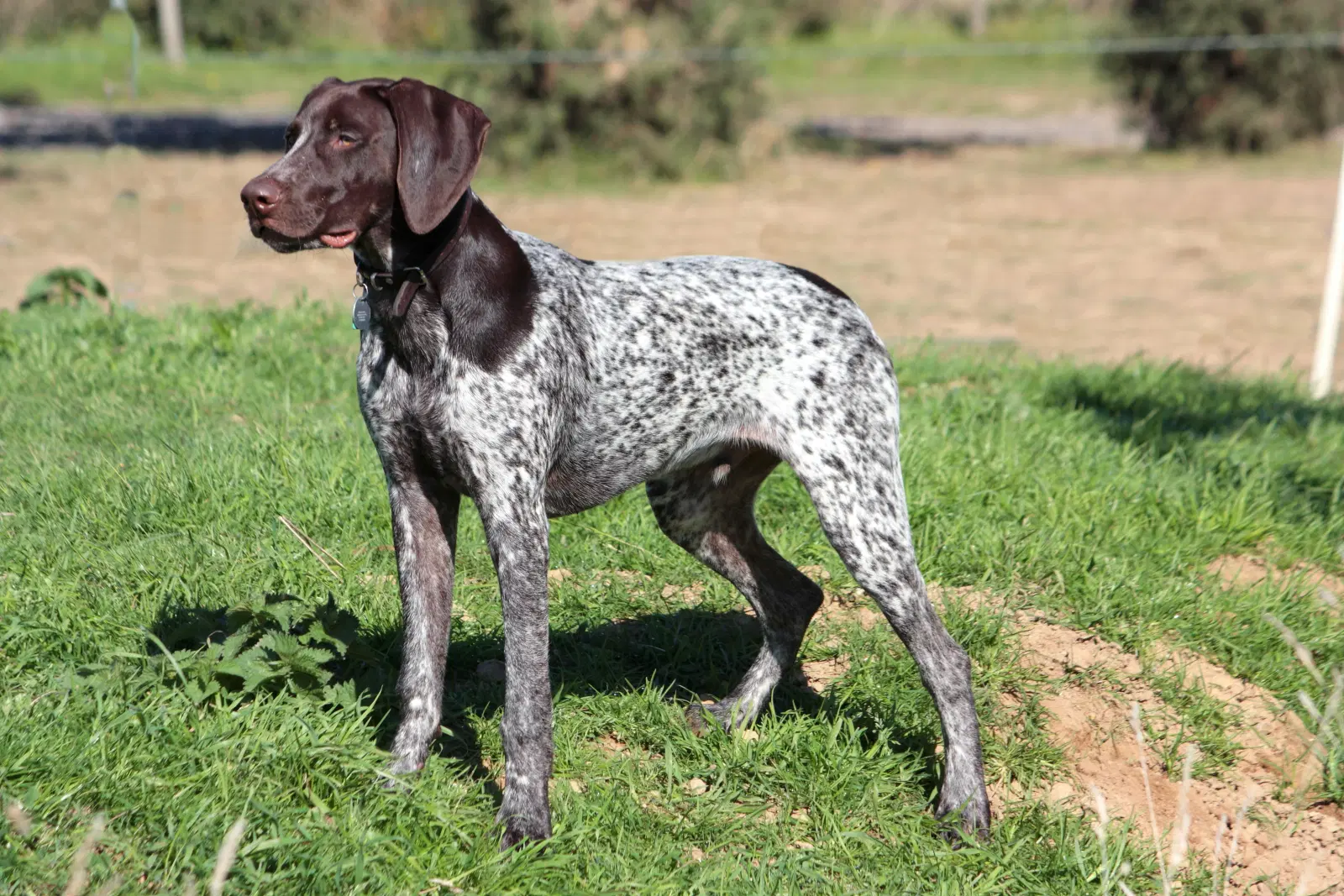
German Shorthaired Pointer at a glance
- Breed Group Sporting
- Adult Weight 45–70 lb
- Male 55–70 lb
- Female 45–60 lb
Life stage timeline
Feeding considerations
This is a breed where underfeeding relative to true activity level is at least as common a mistake as overfeeding, an actively working GSP can need substantially more calories than a companion dog of the same weight. This is general guidance, not a substitute for advice from your veterinarian. Not medical advice, consult your vet.
Energy & temperament
Bred for all day field work, the German Shorthaired Pointer is one of the highest energy sporting breeds and needs a genuinely active lifestyle to stay at a healthy weight and temperament. A bored or under exercised GSP tends toward restlessness rather than calm.
Health & feeding notes
Built for Field Work, Fed Accordingly
The GSP was developed for full days of hunting across varied terrain, and that heritage shows up in real caloric need. A dog training or hunting several hours a week can require close to double the calories of a sedentary companion at the same weight, and a dog working hard in the field during hunting season can need even more. Guessing based on weight alone tends to under feed working and sporting GSPs. Getting the activity level right in the calculator matters more for this breed than most.
Bloat (Gastric Dilatation Volvulus) Risk
Like other deep chested breeds, GSPs are at meaningful risk for gastric dilatation volvulus, a life threatening emergency where the stomach fills with gas and twists. Feeding two or three smaller meals instead of one large one, using a floor level bowl rather than a raised one, and avoiding vigorous exercise for at least an hour before and two hours after eating are the main feeding related steps owners can take to reduce risk. Talk to your veterinarian about whether a preventive gastropexy makes sense for your dog, particularly if you plan to spay or neuter.
Hip and Elbow Dysplasia in a Fast Growing Puppy
GSP puppies grow quickly and reach much of their adult height by 12 to 15 months, which puts them at risk for hip and elbow dysplasia if growth outpaces skeletal development. Feeding a large breed puppy formula with controlled calcium levels, avoiding calcium or mineral supplements, and keeping puppies at a lean body condition rather than a maximal one all support healthy joint development. This does not change the dog's eventual adult size, it just gives bones time to keep up with muscle.
A Lean, Athletic Build Is Normal, Not Underweight
GSPs are meant to carry visible waist definition and an easily felt but not overly prominent rib set, even at a healthy weight. Owners used to stockier breeds sometimes read this normal athletic condition as underweight and overfeed in response, which works against the breed's natural build and adds joint and cardiovascular strain over time. Checking body condition by feel rather than by how prominent the ribs look from a distance gives a more accurate picture.
Lupoid Dermatosis (Exfoliative Cutaneous Lupus Erythematosus)
GSPs, along with Vizslas, are one of the only breeds known to develop this inherited autoimmune skin condition, which is unrelated to diet and cannot be prevented or treated through feeding. Signs typically appear before a year of age, starting with scaling and crusting around the face and ears. There is no dietary fix, but if you notice these signs early, a veterinary evaluation matters more than any feeding change. This is separate from ordinary zinc responsive skin issues seen in fast growing large breed puppies, which are diet related and do respond to correcting the diet.
Heart Screening and Activity Level
GSPs appear on the list of breeds where subaortic stenosis, a congenital narrowing below the heart's aortic valve, has been reported, though it is documented far less often in this breed than in breeds like Newfoundlands or Boxers. Most GSPs have no heart issue and genuinely support a high activity tier without any need to cap calories. The exception is a dog specifically diagnosed with a heart murmur or SAS, where a veterinarian may recommend restricted exercise, in which case feeding for a high activity tier would work against that dog's own medical guidance rather than the breed's general profile.
Pointer Feeding FAQ
How much should I feed a German Shorthaired Pointer puppy?
GSP puppies typically need 3 to 4 meals a day through about 6 months to support their fast growth. Enter your puppy's current weight and age into the calculator above for an exact daily amount.
How much should an adult German Shorthaired Pointer eat per day?
Most adult GSPs need roughly 2.5 to 3.5 cups of a quality dry food a day split into two meals, though a dog training or hunting regularly can need meaningfully more. Use the calculator above with an accurate activity level for a precise number.
Why do German Shorthaired Pointers need more food than similarly sized breeds?
GSPs were bred for sustained field work, and that same drive shows up in companion dogs as a genuinely higher baseline energy need than a less athletic breed carrying the same weight.
Should I feed my German Shorthaired Pointer once a day or twice?
Twice a day, not once. Splitting meals is easier on digestion and lowers the risk of bloat (gastric dilatation volvulus), which deep chested breeds like the GSP are more prone to.
Why do vets recommend a floor level bowl instead of a raised one for GSPs?
Raised bowls were once thought to help large breeds, but research has since linked them to a higher bloat risk in deep chested dogs. A floor level bowl is now the safer recommendation for this breed.
My German Shorthaired Pointer looks thin even though I'm feeding the recommended amount. Is that normal?
Often yes. GSPs are meant to be lean and athletic, with an easily felt rib set and a visible waist, which can look underweight if you're used to a stockier breed. Check body condition by feel rather than appearance, and talk to your vet if you're still unsure.
At what age is a German Shorthaired Pointer considered a senior?
Around 9 years, later than the generic 7 year guideline used for many medium to large breeds. The German Shorthaired Pointer Club of America notes that GSPs tend to stay active later into life, so most don't need a senior diet or activity adjustment until closer to 9.
What is lupoid dermatosis in German Shorthaired Pointers?
It's an inherited autoimmune skin condition seen almost exclusively in GSPs and Vizslas, usually showing up before a year of age as scaling and crusting around the face. It isn't caused by diet and can't be treated through feeding, so if you notice early signs, see your vet rather than adjusting food.